NSPS Series 1: What is NSPS?
Exlterra's Nucleus Separation Passive System (NSPS) represents an innovative approach to radioactive and chemical soil remediation, offering hope where conventional methods have fallen short.
What Is NSPS?

NSPS is a passive, energy-free system that targets contaminants at the atomic level, transforming harmful substances into safe, stable forms within the soil matrix. Traditional remediation methods rely on excavation, chemical treatments, or energy-intensive processes. NSPS works entirely through natural forces already present in the environment.
NSPS uses pre-existing behaviors observed in particles like positrons to passively increase the occurrence of problematic material, such as radioactive isotopes, annihilating. This brings cleaner soils without any maintenance.
The system is installed below the surface with minimal disruption, preserving existing vegetation and soil structure. Made from a durable, chemically neutral polyethylene blend, each unit ensures long-lasting performance and operates passively, requiring no energy or maintenance. The modular design allows customization for diverse environments, from heavily contaminated industrial sites to agricultural fields or landfills.
In Situ Treatment: A Critical Advantage

A key benefit of NSPS is that pollution is addressed in situ—contaminants are neutralized directly where they exist in the soil. This eliminates the need to excavate and transport contaminated material, avoiding the hazardous and costly logistics that plague conventional remediation approaches. By treating soil in place, NSPS removes the risks associated with moving radioactive or chemical pollutants through populated areas, while dramatically reducing project costs and timelines. This in situ approach also preserves the soil's natural structure and ecosystem, preventing the environmental disruption that typically accompanies excavation-based methods.
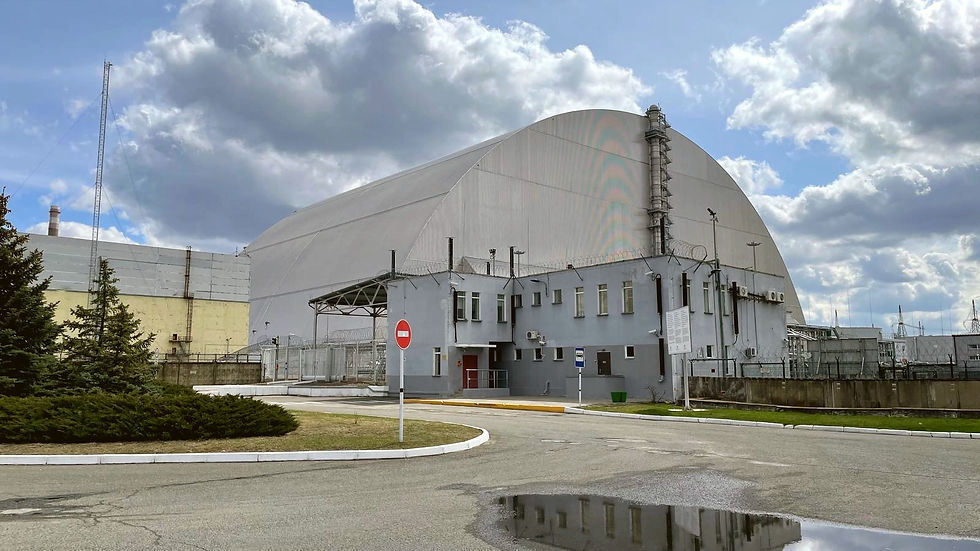
Proven Results at Chernobyl

Field tests at Chernobyl achieved a notable decrease in soil radioactivity, marking the first significant reduction in contamination levels at the site in over three decades. The stabilization process began immediately after installation, with noticeable reductions in contamination levels within the first year.
These results are particularly remarkable because of the technology's completely passive nature. Once installed, the system requires no external inputs, chemical additives, or ongoing maintenance while continuing to work continuously beneath the surface.
Beyond Radioactivity
While NSPS gained recognition for its success at Chernobyl, the technology is also capable of neutralizing chemical pollutants, including PFAS (per- and polyfluoroalkyl substances), heavy metals, and other industrial contaminants. This versatility makes NSPS applicable to a wide range of contaminated sites, from former industrial zones to agricultural lands affected by chemical pollution.
By leveraging soil's innate ability to capture and neutralize particles, enhanced by NSPS's unique configuration, the system provides a permanent, maintenance-free solution to previously intractable environmental challenges. The technology restores not just safety, but also the productive capacity of land, allowing contaminated areas to once again support ecosystems, agriculture, and human communities.
Interested? Learn more or find a licensed installer near you today!


Comments